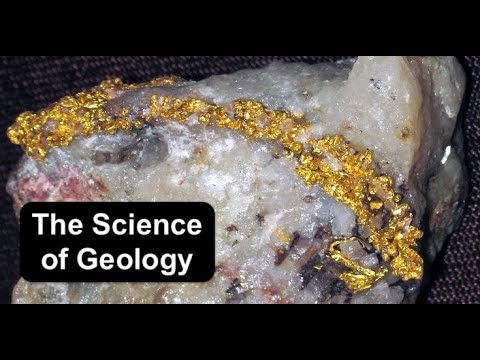
Geology 1 (The Science of Geology)
Content Summary
EducationalGeology 1 (The Science of Geology) • Earth and Space Sciences X
TL;DR
This introductory geology lecture argues that modern geological understanding evolved from religiously-motivated catastrophism and neptunism toward uniformitarianism — the principle that slow, ongoing natural processes (not supernatural catastrophes) shaped Earth over billions of years (0:00). Professor Paul Day traces this intellectual lineage from ancient Greek thinkers through Archbishop Usher's biblical chronology, the neptunist-plutonist controversy, James Hutton's revolutionary observations, and Charles Lyell's popularization of deep time, ultimately arriving at the scientific method and rock cycle as foundational frameworks for understanding our 4.54-billion-year-old planet.
ELI5
Imagine you're building a sandcastle at the beach. A long time ago, people thought a giant wave from a storybook made all the mountains and rocks in one big splash. But then some really smart people watched how rain slowly washes sand away and volcanoes slowly build new mountains, and they figured out that the Earth has been slowly changing itself for a really, really, REALLY long time — way longer than anyone's grandpa can remember!
Top Concepts
Keywords
Quick Actions
- !Understand and apply the principle of uniformitarianism: 'The present is the key to the past' - use currently observable geological processes to interpret ancient Earth features
- !Learn the rock cycle and how igneous, sedimentary, and metamorphic rocks are interconnected through ongoing natural Earth processes
- !Master the geological application of the scientific method: observation, hypothesis formation, experimentation, data analysis, and iteration
Want to analyze your own content?
Extract insights from YouTube videos, PDFs, and web articles. Free to start.
Try Knowmler Free