Content Summary
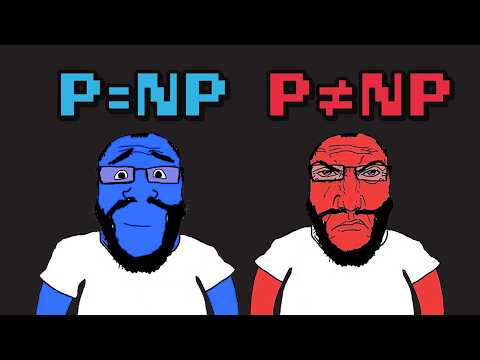
EducationalThe greatest unsolved problem in computer science... • Fireship
TL;DR
The video explores the P versus NP problem — the most famous unsolved problem in computer science — which asks whether problems whose solutions can be verified quickly can also be solved quickly. The presenter argues that while most believe P ≠ NP, no one has been able to prove it either way, and the implications of either answer are profound: P = NP would break all encryption but also solve protein folding and optimization problems, while P ≠ NP suggests fundamental computational limits are baked into reality itself (7:15). The video traces the history from John Nash's 1955 NSA letter through Stephen Cook's 1971 formalization and explains key concepts like polynomial time, NP-completeness, and the SAT problem.
ELI5
Imagine someone gives you a finished jigsaw puzzle — you can look at it and say 'yep, that's right!' really fast. But if someone dumps all the pieces on the floor and says 'now put it together,' that's WAY harder. The big question scientists are trying to answer is: is checking a puzzle always easier than solving it, or could there be a magic trick that makes solving just as fast as checking?
Top Concepts
Keywords
Quick Actions
- !Understand the fundamental distinction between P and NP complexity classes
- !Recognize that modern cryptography (RSA) relies on the unproven assumption that P ≠ NP
- !Learn about NP-complete problems and their interconnected nature
Want to analyze your own content?
Extract insights from YouTube videos, PDFs, and web articles. Free to start.
Try Knowmler Free