Content Summary
EducationalTesting The World's First Solid-State Battery • Ziroth
TL;DR
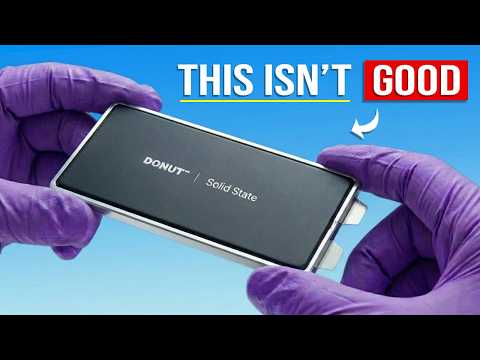
Ryan Inis (Ziroth) analyzes third-party test results from VTT on the Donut Lab "solid-state" battery and concludes with high confidence that it is actually a lithium-ion NMC battery, not a revolutionary solid-state cell. He downgrades his assessment from a 1% chance of the claims being real to 0.1%, citing matching voltage curves, expected internal resistance values, lower-than-claimed energy density (298 vs 400 Wh/kg), slower charging times, and concerning thermal safety limits at 90°C that are consistent with conventional lithium-ion cells rather than a true solid-state battery.
ELI5
Imagine someone says they made a magical new crayon that never runs out and draws by itself. But when a scientist looked at it closely, it looked exactly like a regular crayon — same color, same shape, same waxy smell. It's still a pretty good crayon, but it's not magic!
Top Concepts
Keywords
Quick Actions
- !Use voltage charge curves as electrochemical fingerprints to identify battery chemistry — compare unknown cells against known NMC, LFP, and other lithium-ion profiles
- !Calculate internal resistance from voltage differences at varying charge rates to determine electrolyte type (liquid vs. solid)
- !Independently verify energy density claims by checking tested capacity against stated weight and comparing to marketing figures
Want to analyze your own content?
Extract insights from YouTube videos, PDFs, and web articles. Free to start.
Try Knowmler Free