Content Summary
Religion & SpiritualityThe Greco-Roman Origins of the Eucharist • ReligionForBreakfast
TL;DR
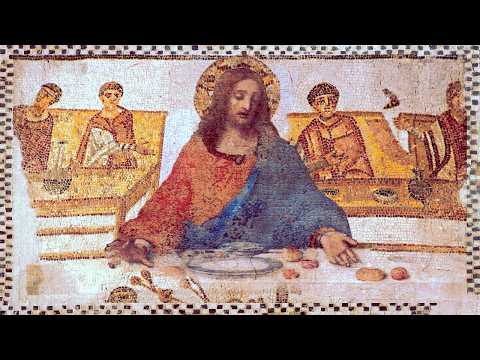
The Eucharist did not emerge from a single fixed ritual or the Last Supper alone, but evolved from Greco-Roman banquet traditions (2:15). Early Christians gathered for full communal meals resembling association dinners, with bread and wine as staples, prayers, and hymns—a practice that only later transformed into the symbolic token-portion ritual we see today (15:30). The path from first-century banquets to modern liturgy involved shifts in meeting times, group sizes, and theological emphasis, with variations like water-only Eucharists being common rather than heretical (23:45).
ELI5
A long, long time ago, Christians didn't just take a tiny cracker at church—they had real dinner parties together! They ate bread and drank wine at big tables with their friends, kind of like a family feast where everyone brings food. Over many, many years, as more and more people wanted to join, the dinner party got smaller and smaller until it became just a little taste to remember Jesus. It's like how your birthday party might have been just your family at first, then grew so big you could only share tiny pieces of cake!
Top Concepts
Keywords
Quick Actions
- !Reframe understanding of Eucharistic origins as emerging from Greco-Roman banquet culture rather than a single founding event
- !Study the Didache's eucharistic prayers as evidence for alternative early Christian theologies
- !Research Greco-Roman voluntary associations (thiasoi, eranoi, collegia) as structural parallels to early Christian communities
Want to analyze your own content?
Extract insights from YouTube videos, PDFs, and web articles. Free to start.
Try Knowmler Free